
With the rising demand for eco-friendly packaging, many products on the market claim to be “green.” But not all of them live up to their promises. As a business or consumer, learning how to identify certified compostable bags is essential for making choices that are truly sustainable. This guide explains what makes a bag genuinely compostable, what certifications to look for, and how to avoid misleading claims.
Why Certification Matters
A bag labelled “biodegradable” or “eco-friendly” isn’t automatically compostable. True compostability means the product breaks down into non-toxic components such as water, CO₂, and biomass within a specified time frame under composting conditions. This is why certified compostable bags are important: they are independently tested against strict standards to ensure they deliver on their claims.
Using certified compostable bags also helps businesses comply with government regulations, reduce landfill waste, and appeal to environmentally conscious customers who care about responsible consumption.
Look for Recognised Standards
The first step in identifying genuine certified compostable bags is to check for credible certification marks. Globally recognised standards include:
- ASTM D6400 (United States)
- EN 13432 (Europe)
- IS/ISO 17088 (India)
Bags meeting these standards are usually labelled with a logo from a certification body such as the Biodegradable Products Institute (BPI), TÜV Austria, or India’s CPCB. These marks indicate the product has passed laboratory tests for disintegration, biodegradation, and eco-toxicity.
If a product doesn’t show any recognised mark, it may not be a true compostable product – even if the label says “biodegradable” or “green.”
Understand the Difference Between Biodegradable and Compostable
A common source of confusion is the difference between biodegradable bags and compostable bags. All compostable products are biodegradable, but not all biodegradable products are compostable.
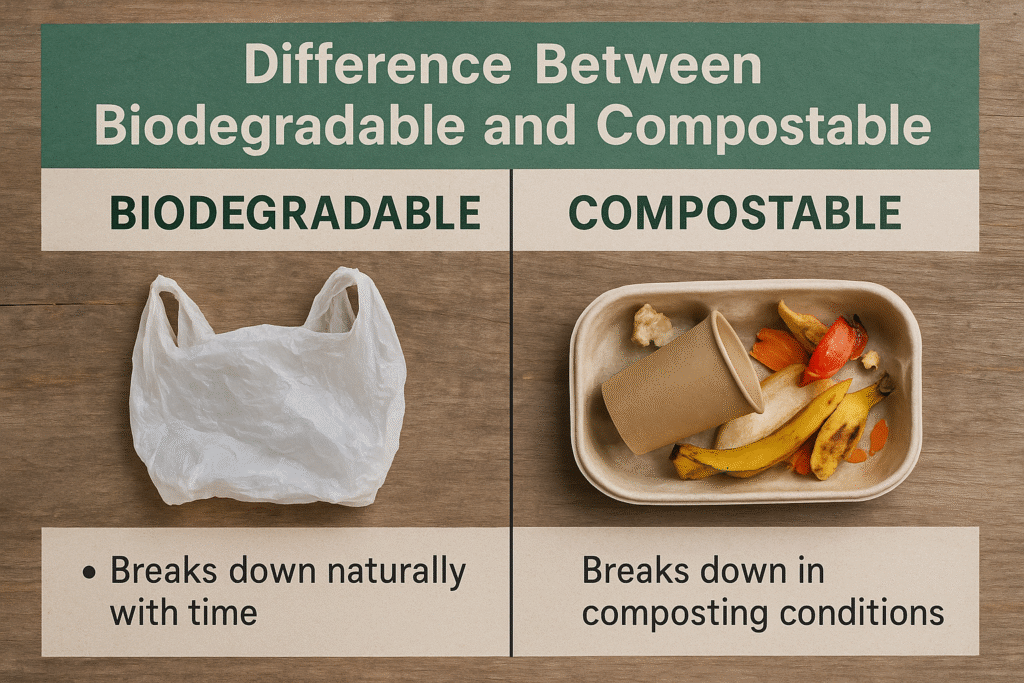
- Biodegradable means the material will eventually break down, but it may take years and leave behind microplastics.
- Compostable means the material breaks down into natural, non-toxic components within a specific period under composting conditions.
Choosing certified compostable bags ensures you’re using a product that meets clear, time-bound standards rather than vague biodegradability claims.
Check the Material Composition
Another way to identify genuine compostable bags is by examining the materials used. True certified compostable bags are typically made from plant-based materials like cornstarch, PLA (polylactic acid), or PBAT blends. These materials break down safely in industrial or home composting systems.
If the bag feels overly plastic-like, lacks information on its composition, or contains petroleum-based plastics mixed with small amounts of plant materials, it may not be genuinely compostable.
Read the Packaging and Labels Carefully
Manufacturers of genuine certified compostable bags usually provide transparent information on their packaging. Look for:
- The certification standard number (e.g., EN 13432)
- The name of the certification body
- Instructions on how to compost the bag (industrial vs. home composting)
- Disposal guidelines
Clear labelling is a good sign that the product has been tested and approved by a credible authority.
Beware of Greenwashing
Greenwashing is when a company uses marketing to make a product appear more sustainable than it really is. Terms like “100% biodegradable,” “eco-safe,” or “earth-friendly” can be misleading if they’re not backed up by certifications.
To avoid greenwashing:
- Ask suppliers for certificates or test reports.
- Verify logos on the certifier’s official website.
- Avoid products with vague claims but no supporting evidence.
This extra diligence ensures you only buy or supply certified compostable bags that meet actual performance standards.
Benefits of Using Certified Compostable Bags
Choosing certified compostable bags goes beyond compliance – it also benefits your brand and the environment:
- Reduced landfill waste: Compostable bags break down naturally, cutting down on pollution.
- Support for circular economy: Materials return safely to the soil as compost.
- Consumer trust: Customers prefer businesses that offer truly sustainable solutions.
- Regulatory readiness: Many regions now require certified products for packaging and waste disposal.
By switching to certified compostable bags, businesses can demonstrate authentic commitment to sustainability while reducing their environmental footprint.
Practical Tips for Businesses
If you’re a retailer or packaging buyer, here are some ways to ensure authenticity:
- Source from reputable manufacturers specialising in eco-friendly packaging.
- Ask for third-party certifications before placing orders.
- Educate your customers on proper disposal methods for compostable bags.
- Stay updated on new standards and local regulations regarding compostable packaging.
Conclusion
In a crowded market full of “green” claims, knowing how to identify genuine certified compostable bags is crucial. By checking for recognised standards, understanding material composition, reading labels carefully, and avoiding greenwashing, you can be confident you’re choosing products that truly benefit the environment.
Whether you’re an individual shopper or a business sourcing packaging, prioritising certified compostable bags helps support sustainable waste management, build customer trust, and move toward a cleaner, greener future.
At GreenMatter Packaging, we specialise in providing high-quality, certified compostable bags and other eco-friendly packaging solutions. Our goal is to help businesses make genuine, sustainable choices that protect the planet while enhancing brand value.