Sustainability has become more than a buzzword—it’s a necessity. With increasing awareness about plastic pollution, biodegradable plastics are gaining attention as a greener alternative to conventional petroleum-based plastics. But what exactly are they, and what types exist today? Let’s explore this in detail.
What are Biodegradable Plastics?
Biodegradable plastics are materials designed to break down naturally with the help of microorganisms like bacteria, fungi, and algae. Unlike traditional plastics that can take hundreds of years to decompose, these eco-friendly alternatives degrade faster under the right conditions, leaving behind water, carbon dioxide, and biomass instead of toxic residue.
They’re not just about waste reduction—biodegradable plastics also help reduce our dependence on fossil fuels since many are derived from renewable sources like corn starch, sugarcane, or vegetable fats. This makes them a key player in building a circular economy where resources are reused and waste minimized.
Some common examples of biodegradable plastics include starch-based plastics, polylactic acid (PLA), and polyhydroxyalkanoates (PHA). Each type has unique properties and applications, making them suitable for different industries.
Types of Biodegradable Plastics
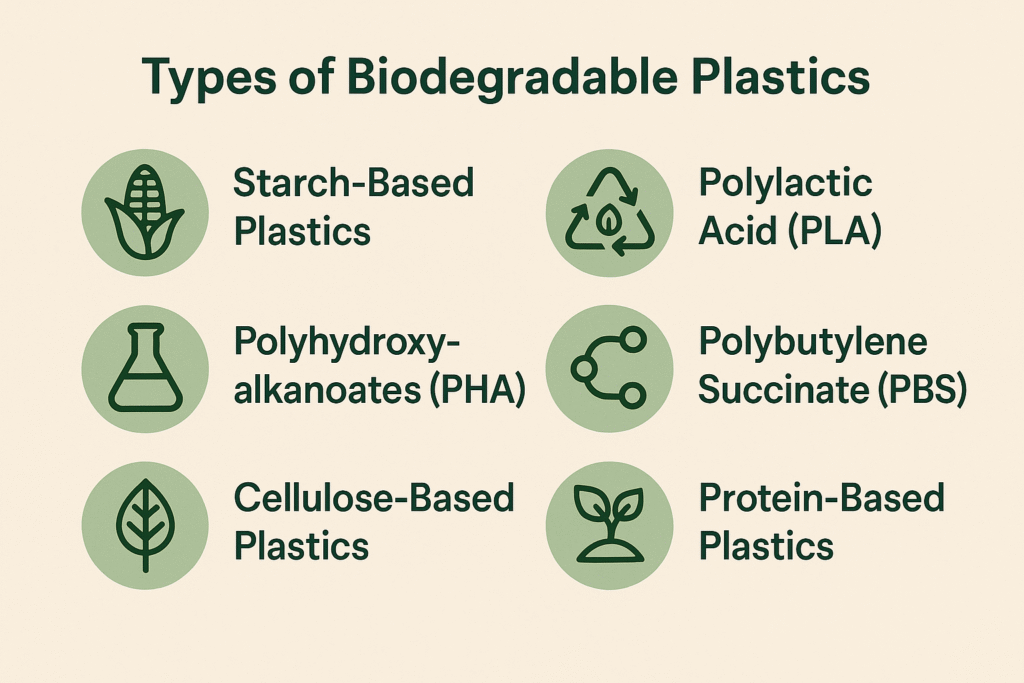
Biodegradable plastics aren’t one-size-fits-all. They come in several forms depending on the raw material and production process. Below are the major types you should know:
1. Starch-Based Plastics
Derived from natural starch (often corn or potato), these plastics are among the most widely used biodegradable options. They are cheap to produce and can blend with other biodegradable polymers to enhance strength and durability.
- Applications: Packaging materials, disposable cutlery, and compostable bags.
- Pros: Renewable, lightweight, and cost-effective.
- Cons: Sensitive to moisture and not ideal for products that need long-term durability.
2. Polylactic Acid (PLA)
PLA is made from fermented plant sugars, usually from corn or sugarcane. It is one of the most popular biodegradable plastics due to its versatility and wide availability.
- Applications: Food packaging, bottles, 3D printing filaments, and medical implants.
- Pros: Transparent, compostable, and suitable for food contact.
- Cons: Has a low heat resistance and may deform under high temperatures.
3. Polyhydroxyalkanoates (PHA)
PHAs are produced by microorganisms through the fermentation of plant-based materials. They are completely biodegradable and even degrade in marine environments, making them a promising alternative to conventional plastics.
- Applications: Medical devices, agricultural films, and packaging.
- Pros: Biocompatible, highly versatile, and eco-friendly.
- Cons: Production costs are still high compared to petroleum plastics.
4. Polybutylene Succinate (PBS)
PBS is created through the polymerization of succinic acid and butanediol, often sourced from renewable feedstocks. It shares properties with petroleum-based plastics but breaks down more easily.
- Applications: Food packaging, disposable products, and agricultural mulch films.
- Pros: Heat-resistant, strong, and industrially compostable.
- Cons: Limited natural degradation in non-composting environments.
5. Cellulose-Based Plastics
These are derived from cellulose, the main component of plant cell walls. They are among the oldest forms of biodegradable plastics and remain relevant today for their durability and biodegradability.
- Applications: Packaging films, coatings, and photographic films.
- Pros: Strong, transparent, and naturally biodegradable.
- Cons: Less cost-efficient compared to some other biodegradable alternatives.
6. Protein-Based Plastics
Made from natural proteins like casein (milk protein) or soy protein, these plastics are still in the experimental stage but show promise as biodegradable alternatives.
- Applications: Niche packaging materials and research-based applications.
- Pros: Renewable and fully biodegradable.
- Cons: Limited large-scale production and higher costs.
Why These Plastics Matter
The rise of biodegradable plastics isn’t just about replacing traditional plastics; it’s about creating a more sustainable future. These materials help:
- Reduce plastic pollution in landfills and oceans.
- Minimize greenhouse gas emissions during production.
- Support eco-friendly business practices across industries.
Governments and businesses are also showing increased interest in adopting biodegradable packaging solutions, particularly in sectors like food delivery, retail, and healthcare.
Final Thoughts
Biodegradable plastics are not a single product but a family of innovative materials offering different solutions for different needs. From starch-based plastics to advanced polyhydroxyalkanoates (PHA), each type has its role to play in reducing plastic pollution and supporting sustainable development.
While challenges like production costs and limited infrastructure for composting remain, the future of biodegradable plastics looks promising as technology improves and awareness grows. As consumers, choosing products made with these materials is a step toward reducing our environmental footprint.
By understanding the types of biodegradable plastics, we can better appreciate how science and innovation are reshaping the way we use, discard, and reuse materials in our daily lives.